Our Favourites
Best Overall
Carrot & Stick The Face Cream
Best Treatment
Carrot & Stick Rx Anti Aging Repair Serum
- Sephora Buy now for $105
- Amazon Buy now for $104
- Walmart Buy now for $106
- Ulta Buy now for $102
You may have heard about the “skin barrier” – and have a vague idea that it should be protected and nurtured. The skincare aisle is full of products claiming to “restore” and “protect” the skin barrier. But what exactly is the skin barrier, and what does it do? We’ll break down everything you need to know about the skin barrier, and how to best take care of it.
What is the Skin Barrier?
The skin is the body’s largest organ and has three main layers- the epidermis, dermis and hypodermis. The outermost layer is the epidermis, which is also referred to as the skin barrier. Taking a deeper look, the skin barrier consists of cells called the stratum corneum along with a “lipid matrix” that is made of fatty acids, ceramides and cholesterols. The cells and lipid matrix work together as a protective barrier. Dr. Peter M. Elias, a dermatologist, came up with a brick and mortar analogy to explain how it works. The stratum corneum is like a brick wall, and the lipids act like the mortar that keeps the bricks in place. Together they create the skin’s barrier.
Why Is The Skin Barrier Important?
Put in the simplest terms, “The skin’s moisture barrier does exactly what it sounds like — it helps the skin to retain moisture, specifically water,” according to dermatologist Kenneth Mark in Allure magazine.
But the skin barrier does more than that, and it is crucial for health. A 2018 paper by AJ Kanwar published in the National Center for Biotechnology Information sums it up this way. “The importance of skin barrier cannot be overemphasized. The skin barrier is important to human life. Physically, it protects from external threats such as infectious agents, chemicals, systemic toxicity and allergens. Internally, the skin helps to maintain homeostasis and protects from enhanced loss of water from the body.”
Another way to think about it is that the skin barrier keeps the good stuff in, and the bad stuff out. The skin barrier helps retain moisture and prevent dehydration, while keeping irritants and microbes out. Some people liken the skin barrier to a “security guard” or the body’s first line of defense as it also prevents water from leaving the skin.
Since the skin barrier is the top layer of the skin, it is also the most visible part of our skin which makes it important cosmetically. A healthy skin barrier is flexible and resilient, which translates into healthy looking skin. A damaged skin barrier can make the complexion look red, raw and flaky, while emphasizing the look of fine lines.
How Do I Know if My Skin Barrier Is Damaged?
Some of the telltale signs of a weakened or damaged skin barrier include dry, flaking skin, along with sensitivity and redness. Anyone who feels a burning or stinging sensation when applying certain products may have a compromised skin barrier. Inflamed skin feels dry and uncomfortable, and could be mistaken for “sensitive skin.” Other signs include prominent lines and wrinkles, as well as itching, and perhaps acne or a rash.
What Causes the Skin Barrier To Weaken?
The skin barrier does weaken due to the natural aging process, as skin gets thinner as we age due to the loss of collagen and elastin. But a weakening of the skin barrier can be accelerated by environmental aggressors such as too much sun, as well as extreme cold and heat. Other big culprits include over exfoliation and the use of overly harsh products that don’t have the proper pH balance. Vigorous cleansing and scrubbing can also strip the layer of protective lipids from the skin. Since moisture is key to the health of the skin barrier, other causes could be lack of water (both internally and externally) as well as too much alcohol and caffeine, which can have a drying effect.
According to the dermatologist Patricia Wexler, “other causes of barrier impairment include excessive washing with soap, dust mite proteases, infections such as staph aureus, and topical allergens,” as she explained to InStyle.
Can The Skin Barrier Heal Itself?
It depends on your age. According to the International Dermal Institute, “the time required for barrier lipid recovery varies according to age; in young individuals 50-60% of the barrier lipids are restored within 12 hours with full recovery taking about three days. However, in older adults complete recovery can take over a week. Depending on the condition of the skin this can lead to dehydration and additional sensitization.
How Can I Improve and Protect My Skin Barrier?
If you think your skin barrier is weak or not as strong as it could be, there are plenty of things you can do to help get back to tip top shape – but always check with a doctor to rule out any underlying medical issues or diseases first.
As with most things, prevention is easier than the cure. Make sure your skin is kept properly hydrated day and night. Look for products with hyaluronic acid, which can hold up to 1,000 times its weight in water as well as humectants, which attract water to the skin. A few common humectants include lactic acid and glycerin.
One of the first steps is to reexamine your skincare routine if you think your skin barrier is damaged. If skin looks red, inflamed and itchy, you could be overloading our face with too many products. This is a good time to strip your regimen back to the basics, by focusing on cleansing, moisturizing and nourishing the skin, and avoiding products that are heavily fragranced.
A 2016 paper, “Understanding the Epidermal Barrier in Healthy and Compromised Skin: Clinically Relevant Information for the Dermatology Practitioners,” published in The Journal of Clinical and Aesthetic Dermatology, describes a few different ways to help a compromised skin barrier, especially for those with skin issues. “There is a body of evidence to show that optimal management of many skin diseases, including eczematous dermatitis, acne vulgaris, rosacea, psoriasis, and xerosis, includes appropriate skin care. Incorporation of a gentle (nonirritating) skin cleanser and a well-designed moisturizer/barrier repair formulation can contribute to improvement of disease-associated signs and symptoms and can mitigate cutaneous irritation caused by certain topical medications.”
- Skip the Scrubbing
Avoid scrubbing your face too much, whether that is using a rotating facial brush or by exfoliation. Some of the harshest scrubs can be chunky, physical exfoliators that may cause microtears to the skin. If you can’t resist exfoliating, try using a soft wash cloth and be gentle. Try to avoid any products containing AHA (alpha hydroxy) and BHA (beta hydroxy acids) such as salicylic acid, as well as retinol based products.
It can also be a good idea to take a break from any toners, especially if they are alcohol based, which can be drying. - Protect Skin From The Sun
This is a given for health reasons as well as aging, but one of the easiest ways to protect the skin barrier is by wearing a broad spectrum sunscreen with a high SPF every single day, no matter what the forecast or weather is outside. - Avoid Extreme Temperatures
Extreme cold and heat can also wreack havoc in the skin barrier, so small changes can help. Try to avoid very hot showers and baths, along with steam rooms and saunas. Always wash your face with lukewarm water. If you live in a cold climate, the wind and bitterly cold temperatures can be a challenge; try to minimize time spent outdoors when possible. When you are outside, protect the face with a good moisturizer and wrap up with a scarf to minimize the amount of exposed skin. Although easier said than done, try not to scratch itchy skin as it just inflames it further. - Boost Hydration
The rule of thumb here is to hydrate the skin, and lock the moisture in. Look for creams and serums packed with hyaluronic acid, and niacinamide, a form of vitamin B-3, that may help with inflammation. Ceramides, which are lipids (fatty molecules), also help keep skin hydrated. Look for humectants like glycerin and You may also want to try a facial oil; you can wear it alone on the face or just add a few drops of oil to your moisturizer. We recommend Carrot & Stick The Face Cream. - Don’t Overwash Your Face
If your squeaky clean face feels dry, itchy and uncomfortable, you may be overdoing it. Most people don’t skip the AM facial cleanse — a splash of water is enough. The evening is when faces need a thorough but gentle cleanse to remove traces of dirt, oil, sweat and makeup. A good facial cleanser should leave skin soft and clean without stripping it off its essential oils. Try a facial cleansing oil or a gentle milky cleanser. - Rethink Your Diet
The skin is the body’s largest organ and needs to be treated accordingly. You are what you eat, so try to eat a healthy, well-balanced diet that is full of lean protein, fruits, vegetables and whole grains, along with plenty of water. You may want to try adding omega rich, oily fish like salmon and mackerel into your diet, which may have an anti-inflammatory effect. - Use a barrier restoring serum for compromised skin barrier. We recommend Carrot & Stick Rx The Anti-Aging Repair Treatment.
Best Products for Barrier Repair
Carrot & Stick Rx The Anti-Aging Repair Treatment. Prescribed.
Carrot & Stick Rx’s new serum treatment is freshly compounded GHK-Cu (copper peptide complex), Estriol, Vitamin C, Niacinamide, and Hyaluronic Acid. Prescribed, freshly compounded.
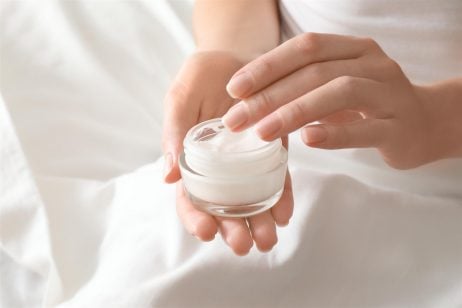
Carrot & Stick The Face Cream
This face cream contains a high concentrations of natural ingredients. It’s formulated with a superblend of plant bioactives rich in phytonutrients, proteins, vitamins, antioxidants, and peptides. Ideal for compromised skin barrier.
What Should I Use on My Skin Barrier?
Whether or not your skin barrier is in prime shape or needs some help, it’s important to treat it kindly with the right products – ones that keep it hydrated, clean and healthy looking without overdrying it. But where to start?
We recommend Carrot & Stick Rx The Anti-Aging Repair Treatment as the first step of your skincare routine. Followed by Carrot & Stick The Face Cream.
Sources: National Center for Biotechnology Information, International Dermal Institute, The Journal of Clinical and Aesthetic Dermatology.