Our Favourites
Best Overall
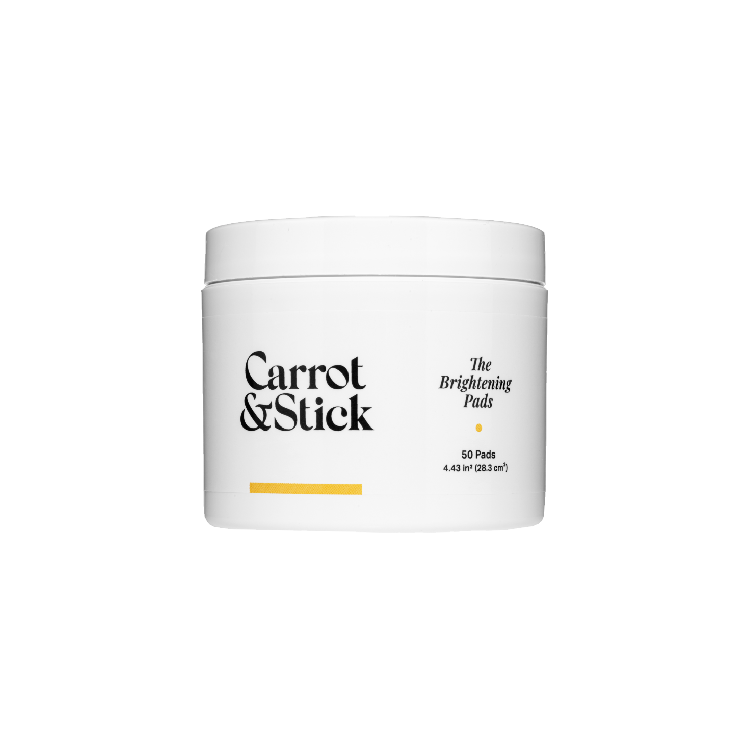
Carrot & Stick Pigmentation Routine
Best Prescribed, Compounded
Carrot & Stick Rx Dark Spot Cream
- Sephora Buy now for $105
- Amazon Buy now for $104
- Walmart Buy now for $106
- Ulta Buy now for $102
A spray of freckles across the nose and cheeks looks undeniably cute, and a new wave of celebrities and supermodels are showing off their freckles. More and more women have stopped trying to camouflage freckles and are choosing to embrace them. But when freckles morph into age spots, they can quickly become not so cute. Here’s a look at what causes age spots, and how to treat them.
What Are The Best Age Spot Removers for Body, Hands, Legs, Arms, Chest, Neck & Face?
Getting rid of age spots comes down to two basic options- products, or in-office procedures. Products include creams and serums but they must be used religiously. In general if you stop using them, the dark spots will come back. The products often have to be applied twice a day and results may take a while. In-office procedures include lasers, cryotherapy (essentially freezing off the dark spot), chemical peels and microdermabrasion. Most people use a combination of approaches.
There are plenty of products which can help fade dark spots, but it is important to keep in mind that consistent and sustained use is key. Here are some of the best ingredients and strategies for getting rid of dark spots. Most products that help fade dark spots contain a cocktail of skin lightening ingredients, which helps boost their efficacy and prevents irritation. Here’s a breakdown.
Prescribed, Compounded Formulas
Compounded products are very powerful. They should be used with the skincare products mentioned below.
We recommend Carrot & Stick Rx Dark Spot Corrector or Carrot & Stick Rx The Body Cream.
Hydroquinone
Hydroquinone is effective at lightening dark spots as it is basically a bleach for the skin. It is found in many Asian lightening/brightening products and works by blocking the melanin-producing enzyme tyrosinase.
We recommend Carrot & Stick Rx Dark Spot Corrector or Carrot & Stick Rx The Body Cream.
Vitamin C
The antioxidant vitamin C is a skin care ingredient all-star frequently found in brightening serums and cleansers. It helps fade discoloration and tackles hyperpigmentation. Vitamin C can be also be found in moisturizers and eye creams. It also works to smooth out skin texture and stabilize the skin after exposure to UV rays.
We recommend Carrot & Stick The Defense Serum
Natural Lighteners for Age Spots
If you want to avoid hydroquinone, look for naturally derived ingredients such as licorice root, mulberry extract and kojic acid, which comes from fungi. They all work on dark spots by helping to inhibit a melanin producing enzyme. Another ingredient to look for on labels is ellagic acid, a compound that can be found in some vegetables, nuts and fruits. It is a natural antioxidant containing polyphenolic, which helps inhibits the formation of sun and age spots.
We recommend Carrot & Stick The Multi Active Radiance Serum
Retinol
Retinol, a vitamin A derivative, is another all-around star when it comes to skincare. It helps soften the look of fine lines and also works to fade dark spots and skin discoloration. It works by revving up skin cell turnover, to reveal fresher and smoother looking skin. Retinols also penetrate deeply into the skin’s surface. Using a retinol can cause irritation and peeling of the skin, so it is best to start slowly and build up to more frequent use. It can also make the skin more prone to sunburns, so be extra vigilant about applying sunscreen.
We recommend Carrot & Stick The Retinol Serum.
At Home Exfoliation
Exfoliation is one of the most important things you can do for the skin. It not only whisks away old, dead skin cells which clog pores and make the face look dull but it helps skin look more radiant as it removes a layer of skin. One of the most gentle ways to exfoliate the skin is with an AHA or BHA (beta hydroxy acid) laced product, such as a mask or peel. Look for ingredients such as glycolic acid, salicylic acid or lactic acid. Try starting with an AHA or BHA cleanser before ramping up to a mask. Exfoliators made from rice enzymes are also gentle on the skin. Another way to whisk away old skin cells is with a sonic cleansing brush but be careful not to overdo it, which could leave your face irritated.
Microdermabrasion and Peels
A doctor or medical professional can perform a deeper exfoliation with either a chemical peel, or microdermabrasion. This procedure buffs away the top layer of skin using a fine spray of crystals, leaving the skin soft and smooth – and helping to fade dark spots. Multiple treatments may be necessary to achieve the desired results. A chemical peel is another way to exfoliate by using acid to remove the top layer of skin. Healing times and results vary.
We recommend Carrot & Stick Micro Peel Exfoliator
Age Spot Removal with Laser
Lasers can also help fade dark spots, and they work in different ways. With laser resurfacing, beams of light remove layers of skin to get rid of hyperpigmentation, and new skin grows in in its place. Healing time can range from 10 to 21 days. IPL (intense pulsed light) lasers target the melanin and break it up to get rid of it. Multiple sessions at a dermatologist’s office are usually needed to see results.
Cryotherapy for Age Spots
Another option for tackling age spots on the hands is cryotherapy, which can be done in a doctor’s office. Cryotherapy fades dark spots by freezing them with a liquid nitrogen solution, which then causes the dark skin to peel off. Every procedure carries risk, and some possible side effects include over lightening of the skin and permanent white scars, according to the American Society for Dermatologic Surgery (ASDS).
Derm Tip
To achieve powerful results, we recommend combining your skincare routine with prescribed dark spot corrector. We recommend Carrot & Stick Rx Dark Spot Cream or Carrot & Stick Rx The Body Cream.
What Are The Best Age Spot Treatments to Try?
We recommend Carrot & Stick Rx Dark Spot Corrector or Carrot & Stick Rx The Body Cream, a custom, prescribed product, every second day. The combinator makes a powerful treatment.
Combine with Carrot & Stick Pigmentation Routine for Age Spots to accelerate results.
FAQs
Both are incredibly effective. Vitamin C brightens and improves pigmentation issues, while retinol stimulates collagen production, another way to remove dark spots. You have to be careful not to use retinol that’s too strong for your skin because it can cause inflammation and exacerbate dark spots. You can find some dark spot serums that are safely formulated to include both active ingredients, which is a win-win.
Those with darker skin tones may have a higher risk of discoloration or hyperpigmentation from the use of retinol, so this ingredient (along with prescription-strength ingredients) should be used sparingly.
Age spots are also called dark spots, hyperpigmentation, sun spots and liver spots. You may be wondering what an age spot looks like. In the most basic terms, they are flat brown, tan or black spots on the skin. A raised dark spot is most likely a mole (but anything suspicious looking should be checked out by a doctor). Some acne scars may also look like dark spots as skin creates melanin when it is inflamed.
A true age spot is called a “solar lentigine,” according to the Mayo Clinic, and is caused by repeated and prolonged sun exposure. A freckle, on the other hand, can be caused by genetics. Another key difference between a freckle and an age spot is that freckles tend to fade in the winter and come back in the summer. Old age spots don’t go away. They often just get bigger.